
IS THE 2% RULE OBSOLETE? RETHINKING POSITION SIZING IN THE ERA OF MICRO CONTRACTS
For decades, the 2% Rule was gospel. Never risk more than 2% of your account on a single trade. It was drilled into us by trading books, mentors, and risk management courses. It is simple, conservative, and easy to calculate. But here is the uncomfortable truth facing traders in 2026. The question is no longer whether the rule is safe it’s whether it’s still optimal. So, Is the 2% rule obsolete? Let's found out
FUTURES TRADING
C. Michelle
2/16/20264 min read
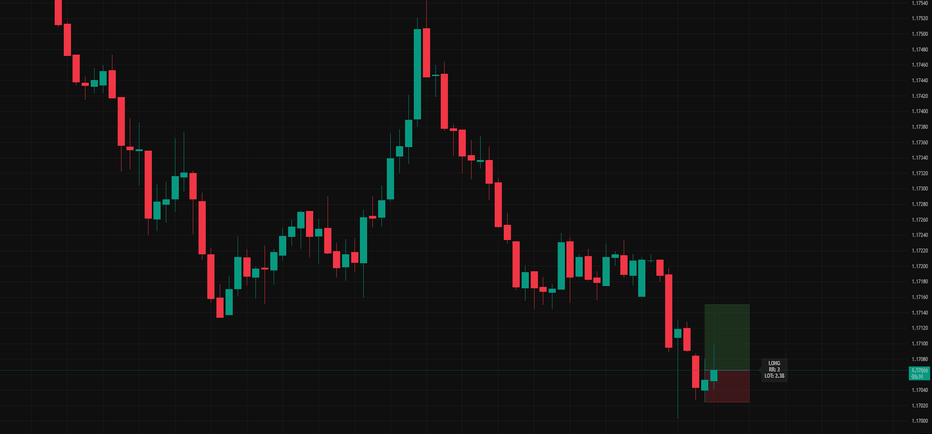
The 2% Rule is not wrong. It is just blunt. And in the era of micro contracts, it may actually be hurting your performance. This is not an argument for abandoning risk management. It is an argument for upgrading it. With the rise of micro futures contracts, tighter margin structures, and prop firm evaluation models, traders now have tools that didn’t exist when the 2% rule became popular.
The Origin of the 2% Rule
The 2% rule emerged from traditional money management principles designed to prevent catastrophic drawdowns. The logic was straightforward:
Risk small.
Survive long enough.
Let compounding work.
In an era dominated by standard contracts, large tick values, and limited position flexibility, 2% was a practical safeguard against overexposure.
But that framework assumed:
Coarser position sizing
Less granularity
Larger capital requirements per contract
That assumption no longer holds.
The Problem: 2% is an Account Metric, Not a Market Metric
The fatal flaw of the 2% Rule is simple: It only looks at your P&L. It ignores what is happening in the market.
Consider this scenario.
You are trading Micro E-mini S&P 500 futures (MES). You have a $20,000 account. Your 2% Rule says you cannot lose more than $400 on a trade.
Day One: The market is quiet. The ATR (Average True Range) is low. Your stop loss is 10 points. You can comfortably trade 2 MES contracts.
Day Two: CPI day. Volatility spikes. Your stop loss is now 20 points. To stay under $400, you must reduce your position size by half.
The 2% Rule works here. It keeps you alive. But notice what happened: The rule forced you to size down precisely when volatility increased.
Enter Micro Contracts: A Structural Shift
Micro futures contracts such as the Micro E-mini S&P (MES), Micro Nasdaq (MNQ), and others have fundamentally changed position sizing mechanics.
Instead of being forced into:
1 contract
2 contracts
Or nothing
Traders now have precision.
A micro contract is typically 1/10th the size of a standard contract. This allows traders to scale in and out, adjust exposure dynamically, and align risk more precisely with their strategy.
This isn’t just convenience it’s structural change.
When Micro E-minis launched in 2019, the industry celebrated.
"Finally, small accounts can trade indices!"
"Precise position sizing is here!"
"Risk management just got easier!"
But something unexpected happened.
Traders did not use micros to right-size their risk. They used micros to over-leverage their accounts.
The paradox: Because the contract value is smaller, traders feel comfortable buying more contracts. A trader who would never buy 2 E-minis (NQ) will happily buy 10 Micro NQ contracts. The notional exposure is identical. The risk is identical. But the behavior is different. The 2% Rule cannot solve this. It only calculates the dollar amount. It does not measure exposure, volatility, or correlation.
The 2% Rule tells you how much you can lose. It does not tell you how much you should bet.
Why the 2% Rule May Be Too Rigid Today
1. Volatility Isn’t Constant
Markets move differently across sessions, news cycles, and macro regimes. A flat 2% risk model assumes volatility consistency, which simply isn’t reality.
Micro contracts allow volatility-adjusted sizing.
You can reduce size during high volatility and increase size during compression — without violating risk discipline.
2. Trade Quality Isn’t Equal
Not all setups carry the same statistical edge.
A mechanical 2% rule treats:
A high-probability A+ setup
And a marginal B- setup
…as equal in risk allocation.
Modern traders often scale risk based on conviction and data. Micro contracts allow incremental increases without jumping exposure dramatically.
3. Drawdown Models Have Changed
In today’s environment especially for prop traders maximum trailing drawdowns and daily loss limits matter more than arbitrary percentage rules.
Sometimes risking 2%:
Violates daily limits
Reduces flexibility for multiple attempts
Increases psychological pressure
Micro contracts allow risk slicing instead of one large bet, traders can structure layered entries that better align with modern evaluation rules.
The Real Question: What Should Replace It?
Instead of asking whether 2% is dead, the better question is:
What’s more efficient?
Here’s what many modern traders are shifting toward:
Volatility-Based Position Sizing
Sizing positions based on ATR (Average True Range) or expected move.
Dollar-Based Risk Caps
Fixed dollar loss limits per day rather than fixed percentages per trade.
Tiered Risk Allocation
Risk 0.5%–1% on standard setups
1%–1.5% on high-conviction setups
Portfolio-Level Risk Control
Managing total exposure across correlated positions instead of isolating each trade.
The Upgrade: Volatility-Adjusted Position Sizing
If the 2% Rule is a hammer, modern position sizing is a Swiss Army knife.
The goal is no longer simply "don't lose 2%." The goal is risk parity across trades ensuring each position has a similar impact on your equity curve, regardless of market conditions.
Here is the formula professional traders use:
Position Size = (Account Risk per Trade) ÷ (Stop Distance in Dollars)
But here is the upgrade: Stop Distance should be expressed in ATR, not fixed points.
How It Works
Step 1: Define your risk in percentage terms (e.g., 1% of account).
Step 2: Define your stop loss in ATR multiples (e.g., 1.5x ATR).
Step 3: Calculate dollar volatility per contract.
Step 4: Size the position so your 1% risk equals the 1.5 ATR stop.
Example
Account: $50,000
Risk per trade: 1% ($500)
Instrument: Micro Gold (MGC)
ATR: $8.00 per tick
Stop: 2.0 ATR ($16.00 per contract)
Position Size = $500 ÷ $16 = 31.25 contracts (Realistically, 3 MGC or 1 GC)
Notice what happened here: The market told you how big your position should be.
When volatility is low, ATR shrinks, and your position size increases.
When volatility is high, ATR expands, and your position size decreases.
You are no longer fighting the market. You are aligning with it.
Is the 2% Rule Actually Dead?
Not exactly.
For beginners, it’s still a useful guardrail. It prevents catastrophic mistakes and enforces discipline.
But for traders operating in:
Micro futures markets
High-frequency environments
Prop firm structures
Volatility-sensitive strategies
…it may be outdated as a one-size-fits-all solution.
The market has become more granular. Risk management should too.
Last Thoughts
Do not abandon risk management. Abandon rigid rules that ignore market structure!!!
Micro contracts didn’t just lower the cost of entry they increased the precision of risk control.
And in modern markets, precision beats tradition.
The 2% rule isn’t wrong.
It’s just no longer the ceiling of risk management sophistication.
The real edge today isn’t in how much you risk
It’s in how intelligently you size.
TRADING
Expertise in commodities trading, advisory, and procurement management services.
CONTACT
Churchill Executive Towers, Office 900 Business Bay, Dubai, UAE
801 Brickell Ave Ste 811 Miami, FL 33131
Dubai - 971 55 117 7276
Miami - 305 461 0016 info@stonekingdomcap.com