
RARE EARTH MINERALS: THE HIDDEN FOUNDATION OF THE MODERN WORLD
When people think about valuable natural resources, they often think of gold, oil, or diamonds. However, some of the most strategically important resources in the world today are rare earth minerals. From the depths of the Earth to the heart of geopolitical strategy, here is why these "industrial vitamins" are the most critical resource you’ve never thought about.
PHYSICAL TRADING
Linda Parker
3/12/20264 min read
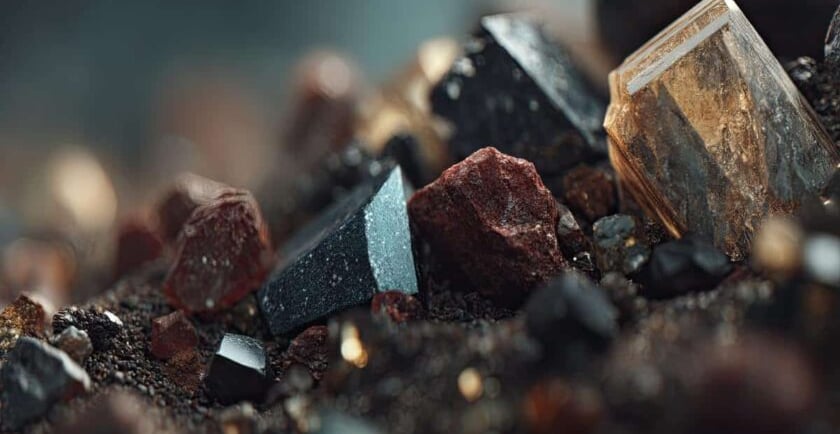
In an age defined by electrification, automation, and digital connectivity, the world’s most powerful technologies depend on something surprisingly fragile: a cluster of obscure elements known as rare earth minerals. They sit quietly at the bottom of supply chains, yet they determine the trajectory of global industries from defense and energy to consumer electronics and advanced manufacturing.
Rare earths are not rare in terms of abundance. What’s rare is the ability to extract, refine, and process them at scale. And that bottleneck has become one of the most strategically important and geopolitically sensitive choke points of the 21st century.
What Are Rare Earth Minerals?
Rare earth minerals refer to a group of 17 chemical elements found in the Earth’s crust. These include the 15 elements in the lanthanide series plus scandium and yttrium.
Some of the most widely used rare earth elements include:
Neodymium – used in powerful magnets
Dysprosium – improves magnet performance at high temperatures
Lanthanum – used in camera lenses and batteries
Cerium – used in catalytic converters and glass polishing
Yttrium – used in lasers and LED lights
Interestingly, rare earth minerals are not actually rare in terms of availability. Many of them are relatively abundant in the Earth's crust. The challenge lies in extracting and processing them, which is technically difficult and environmentally demanding.
Why Rare Earth Minerals Are So Important
Rare earth minerals are critical because they enable technologies that power the modern world.
1. Technology and Electronics
Nearly every high-tech device uses rare earth elements.
They are found in:
Smartphones
Computer hard drives
Flat-screen televisions
Fiber optic cables
Semiconductor chips
For example, neodymium magnets are used in speakers, microphones, and hard drives because they are incredibly powerful for their size.
Without rare earth minerals, the modern electronics industry would struggle to function.
2. Renewable Energy and Clean Technology
Rare earth minerals play a major role in the global transition to clean energy.
They are used in:
Wind turbines
Electric vehicle motors
Solar power systems
Energy-efficient lighting
Wind turbines rely on strong rare earth magnets to generate electricity efficiently. Electric vehicles also depend heavily on rare earth elements for their motors and batteries.
As countries push for lower carbon emissions, demand for rare earth minerals is increasing rapidly.
3. Defense and National Security
Rare earth minerals are also essential for military technology.
They are used in:
Missile guidance systems
Radar systems
Fighter jet engines
Satellite communications
Advanced sensors
Because of this, many governments consider rare earth elements strategic resources that are vital for national security.
The Secret Superpowers of the Periodic Table
What makes these specific elements so indispensable? It all comes down to their unique chemistry, specifically their 4f electron orbitals. These electrons are deeply buried within the atom, shielding them from the environment. This "shielding" effect gives rare earths their unparalleled magnetic strength and sharp, vibrant luminescence.
Neodymium (Nd), Praseodymium (Pr), and Dysprosium (Dy): These are the workhorses of the green energy transition. They form the basis of the world's strongest permanent magnets. You will find them in the motors of electric vehicles (EVs), the generators of wind turbines, and the voice coils of your headphones.
Terbium (Tb) and Europium (Eu): These are the magicians of light. When struck with energy, they emit specific colors—green and red, respectively—with stunning efficiency, making them essential for LEDs and display panels .
Lanthanum (La) and Cerium (Ce): These are the workhorses of the chemical industry, used extensively in catalytic converters to clean car exhaust and in polishing powders to create precision optical lenses.
Without these 17 elements, the electric vehicle revolution would stall, renewable energy would be harder to store and utilize, and our electronics would be far bulkier and less efficient.
Global Supply and the Geopolitical: The New Front Line of Mineral Security
One of the biggest issues surrounding rare earth minerals is where they are produced and processed.
Currently, a large portion of the world’s rare earth supply chain is dominated by a few countries. Mining, refining, and processing rare earth elements requires specialized technology and significant investment.
Because rare earth minerals are critical for both industry and defense, countries around the world are now working to develop new supply chains and reduce dependence on limited sources.
This has turned rare earth minerals into a major topic in global economic competition and geopolitical strategy.
Rare earths have become a geopolitical pressure point. Over the past decade, China has hinted at export restrictions during trade disputes, signaling that rare earths can be used as leverage in global negotiations.
Meanwhile:
The U.S., EU, and Japan are racing to diversify supply chains.
African nations are emerging as new exploration hubs.
Australia and Canada are positioning themselves as stable, long‑term suppliers.
Private capital is flowing into rare earth startups, magnet factories, and recycling technologies.
The competition is no longer just about resources it’s about industrial sovereignty.
The Energy Transition Will Multiply Demand
As the world accelerates toward electrification, demand for rare earths is set to surge:
EV adoption is projected to multiply magnet demand severalfold.
Offshore wind capacity is expanding rapidly.
Grid modernization requires advanced materials for transformers and power electronics.
The irony is that the clean‑energy revolution depends on minerals that are anything but easy to produce. Without rare earths, the global decarbonization agenda becomes significantly harder to achieve.
What This Means for Investors, Traders, and Policymakers
Rare earth minerals are no longer a niche topic for geologists. They are a strategic asset class with implications across:
Commodity markets
Defense strategy
Energy policy
Technology manufacturing
Global trade flows
For investors and industry leaders, the message is clear:
Rare earths are the backbone of the modern world—and the next decade will redefine who controls that backbone.Those who understand the supply chain dynamics, geopolitical risks, and technological dependencies will be positioned to lead in a world where materials matter as much as markets.
Final Thoughts
Rare earth minerals may not receive as much attention as oil or gold, but they are quietly powering the modern world. From the smartphones in our pockets to the wind turbines generating clean energy, these elements play a crucial role in the technologies that define our era.
As global demand continues to rise, rare earth minerals will remain at the center of discussions about innovation, sustainability, and economic security.
Understanding their importance helps us better appreciate the hidden resources that make modern life possible.
TRADING
Expertise in commodities trading, advisory, and procurement management services.
CONTACT
Churchill Executive Towers, Office 900 Business Bay, Dubai, UAE
801 Brickell Ave Ste 811 Miami, FL 33131
Dubai - 971 55 117 7276
Miami - 305 461 0016 info@stonekingdomcap.com