
THE BEEF DEMAND CYCLE: UNDERSTANDING HOW RETAIL, FOODSERVICE, AND EXPORTS SHAPE CATTLE PRICES
If you’ve ever wondered why ground beef is on sale in September or why steak prices spike before a holiday weekend, you’ve already brushed up against the beef demand cycle. But for cattle producers, meat processors, and investors, understanding this cycle isn't just about saving money at the checkout it’s about predicting cash flow and managing risk.
FUTURES TRADINGPHYSICAL TRADING
5/6/20264 min read
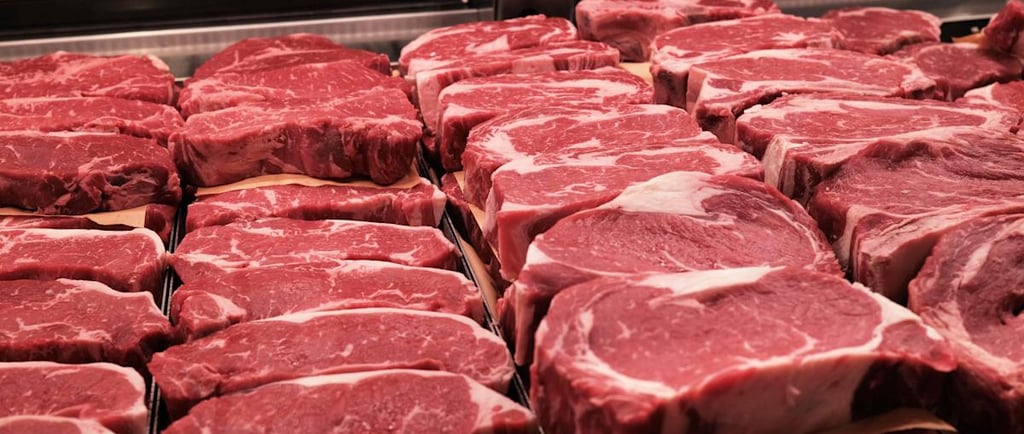
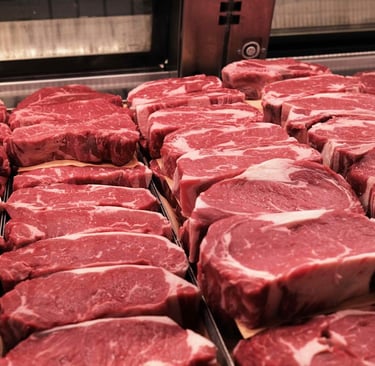
Live cattle prices don’t move in a vacuum. They rise and fall based on a demand chain that begins far from the feedlot in grocery stores, restaurants, and overseas markets. If you want to understand the live cattle market, you must start with the consumer. Everything else is downstream.
In 2026, this demand-driven dynamic is more important than ever. With shifting consumer preferences, volatile restaurant traffic, and export competition intensifying, the cattle market is increasingly shaped by how — and where — beef is consumed. This is the beef demand cycle, and it’s the engine behind live cattle prices.
The Three Legs of the Demand Stool
1. Retail: The Steady Anchor
Retail demand is the most predictable, but also the most reactive to price. Grocery stores buy beef continuously, but their purchasing behavior changes with the calendar.
The "Feature" Cycle: Grocers use beef as a loss leader. They will feature specific cuts (like brisket or chuck roast) at low margins to get shoppers in the door. When retail demand is strong, grocers bid aggressively for middle meats (loins and ribs), pushing wholesale and eventually live cattle prices higher.
Seasonality: Retail beef sales spike during grilling season (Memorial Day to Labor Day) and again during the winter holidays (roasts for Christmas and New Year’s).
The Price Cliff: Retail is the most price-sensitive leg. If meat prices rise too fast, consumers "trade down" from ribeye to sirloin, or from beef to chicken. This "demand destruction" is the fastest way to break a cattle rally.
2. Foodservice: The Volume Driver
Restaurants consume a different part of the animal than retail grocers. While grocery stores sell steaks and roasts, massive restaurant chains (think fast food and casual dining) grind millions of pounds of beef for burgers.
The Ground Beef Complex: Foodservice demand drives the value of trimming, the parts of the carcass left over after cutting the premium steaks. When restaurant traffic is up, the price of 50% trim (used for ground beef) soars. This allows packers to pay more for the live animal because they can sell the "everything else" for a high price.
Premium Dining: High-end steakhouses bid up the price of Prime and Choice ribeyes and strips. When the economy is strong, business travel and expense account dining drive this segment, lifting the entire carcass value.
3. Exports: The Wild Card
Domestic demand is relatively stable. Export demand is volatile, political, and extremely lucrative. The U.S. exports roughly 10-15% of its beef production, but those cuts are often the hidden gems.
The Variety Meat Market: Countries like Mexico, Egypt, and Vietnam buy livers, tongues, and tripe—items that Americans largely avoid. Selling these parts overseas adds 50–50–100 to the value of every carcass. Without exports, those byproducts flood the domestic rendering market and drop to near zero.
Premium Exports: Japan and South Korea fight for U.S. grain-fed beef, specifically the short plate and chuck roll. These are high-value cuts that compete with domestic steak demand.
The Geopolitical Risk: A port strike, a trade war (like the one with China in 2020), or a currency fluctuation can shut an export window overnight. When that happens, those pounds stay in the U.S., crushing domestic prices.
How the Three Channels Work Together
The real insight comes from understanding how these three demand channels interact.
Scenario 1: Strong Across the Board
Retail steady
Foodservice booming
Exports rising
Result: Strong upward pressure on cattle prices
Scenario 2: Weak Economy Shift
Retail holds steady (people still eat at home)
Foodservice declines
Exports uncertain
Result: Mixed signals, often leading to sideways or slightly lower prices
Scenario 3: Export-Driven Market
Retail stable
Foodservice moderate
Exports surge
Result: Prices rise due to tightening supply
Scenario 4: Demand Breakdown
Retail weak
Foodservice declining
Exports slowing
Result: Broad price weakness in cattle markets
How the Cycle Moves Throughout the Year
January – February (The Slump): Post-holiday belt-tightening. Retail demand drops. Foodservice slows. Export activity picks up (China buying for Lunar New Year), but not enough to stop falling prices. This is usually the seasonal low for cattle.
March – May (The Ramp Up): Grocers start featuring steaks for Easter and Mother’s Day. Restaurants order heavier for spring break travel. Exporters position for summer grilling imports. The "cutout" (wholesale beef price) begins to rise.
June – August (Grilling Season Peak): This is the crescendo. Retailers fight for ribeyes and strips. Foodservice buys every patty they can freeze. Packers run plants at full capacity. Live cattle prices often hit their yearly high in late July or early August.
September – October (The Back-to-School Shift): Retail switches from steaks to roasts and ground beef (think pot roasts and chili). Foodservice volume stays steady, but the mix changes to burgers and value items. Exports often dip as the domestic market takes priority.
November – December (The Holiday Rally): A second, smaller spike occurs. Retail demands prime rib roasts. Exports ship high-value cuts for Western European and Asian holiday tables. Prices rise again, though usually not to summer highs.
Why This Matters Right Now
Currently, U.S. cattle herds are at the smallest level in decades. This tight supply usually means high prices. However, demand is fragile.
If foodservice slows down (due to a recession or changing consumer habits), the price of ground beef and trimmings collapses, pulling the whole carcass down.
If retail shoppers decide that $8/lb for ground chuck is too much and switch to pork, producers lose their safety net.
If exports to Japan or South Korea hit a tariff wall, those premium cuts get "dumped" back onto the U.S. market, competing with domestic steaks and driving prices lower.
What Traders Should Watch in 2026
To anticipate live cattle price movements, focus on the leading indicators within each demand segment:
Retail Indicators
Weekly retail beef feature activity
Consumer confidence and wage growth
Substitution trends toward pork or chicken
Foodservice Indicators
Restaurant traffic data
Hotel and travel trends
Wholesale beef cutout values
Export Indicators
Weekly export sales reports
Dollar strength vs. yen, won, peso, and yuan
Trade policy developments
In 2026, the biggest wildcards will be export volatility and consumer spending resilience. Both will determine whether cattle prices maintain strength and face downward pressure.
Final Thoughts: Demand Is the True Market Driver
The beef market isn’t random, it’s a system driven by real demand flowing through retail shelves, restaurant menus, and global trade routes. Prices in Live Cattle don’t just move because of charts they move because buyers' step in (or step away) across these three channels.
Retail provides the floor.
Foodservice drives momentum.
Exports act as the accelerator.
When all three align, the market doesn’t drift it moves with force. And when they begin to weaken or diverge, that’s where cracks form and trends reverse. The traders and operators who consistently win in this space aren’t reacting to price they’re reading demand before it fully shows up on the chart. They understand that by the time a move is obvious, the real opportunity has already started.
TRADING
Expertise in commodities trading, advisory, and procurement management services.
CONTACT
Churchill Executive Towers, Office 900 Business Bay, Dubai, UAE
801 Brickell Ave Ste 811 Miami, FL 33131
Dubai - 971 55 117 7276
Miami - 305 461 0016 info@stonekingdomcap.com