WHAT HAPPENS TO COMMODITIES DURING A WAR? HOW CAN TRADERS PROFIT FROM GLOBAL CONFLICT?
War is often described as the ultimate geopolitical shock. While the human cost is immeasurable, the financial markets react with cold, hard logic. For commodity traders, conflict zones are not just headlines; they are seismic shifts in supply and demand. Let’s break down the economics of conflict.
PHYSICAL TRADINGFUTURES TRADING
4/7/20263 min read
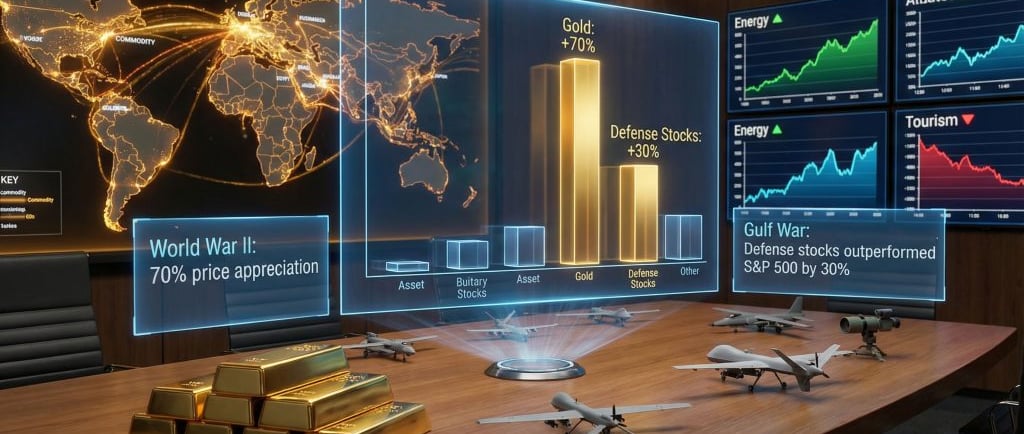
War doesn’t just reshape borders it reshapes markets. For traders, periods of global conflict often create some of the most volatile and profitable conditions, especially in the commodities market. Supply chains fracture, shipping lanes close, sanctions redraw trade maps, and governments scramble to secure critical resources. In this chaos, commodities become the pulse of global conflict and traders who understand the mechanics can navigate volatility not just to survive, but to profit. This isn’t about glorifying conflict. It’s about understanding the structural realities of markets that react instantly to geopolitical shocks. For investors, procurement leaders, and commodity traders, war is a stress test of strategy, risk management, and agility. Understanding how and why commodities move during war can give traders a serious edge. But it also requires discipline, timing, and a clear strategy.
Why Commodities React So Violently to War
War disrupts the three pillars that keep commodity markets stable:
Supply — Mines, farms, refineries, and ports are often located in conflict zones. Production halts or slows.
Logistics — Shipping routes become dangerous or restricted. Insurance costs spike. Freight rates surge.
Policy — Sanctions, export bans, and emergency stockpiling distort normal trade flows.
When any of these breaks, prices move. When all three break at once, markets explode.
Key Commodities That React the Most
Some commodities are more sensitive to war than others:
Crude Oil
Oil is the most reactive commodity during conflict. Any threat to production or transportation—especially in key regions—can send prices soaring.Gold
Known as a “safe haven,” gold tends to rise when investors seek stability during uncertain times.Natural Gas
Highly volatile, natural gas reacts strongly to regional conflicts and supply constraints.Wheat
Wars can disrupt food supply chains, leading to sudden price increases in agricultural products.
The “Fear Premium” Explained
One of the most important concepts traders need to understand is the fear premium.
Prices don’t just move based on what is happening they move based on what could happen.
If traders believe supply might be disrupted, they start buying early. This anticipation pushes prices higher before actual shortages even occur.
This is why markets often spike quickly at the start of a conflict.
The Trader’s Playbook: How Profit is Made
This is the sensitive part. While no ethical trader roots for war, experienced investors know the patterns. Here is how sophisticated traders navigate (and profit from) global conflict.
1. The "Risk Premium" Trade
Before a single bomb drops, if tensions rise, traders buy futures. They aren't betting on war; they are betting on uncertainty. Even the threat of a supply disruption adds a "risk premium" to the price of oil and gold.
2. The Arbitrage of Sanctions
When the West sanctions a nation (e.g., Russia or Iran), that commodity doesn't disappear; it just gets rerouted.
The Play: Traders buy discounted Russian oil (trading at a "Urals discount") and sell Brent crude (global benchmark). They profit by moving the physical commodity to nations that aren't sanctioning (like India or China).
3. The "Flight to Safety" (Gold)
Gold is the ultimate crisis commodity. It has no counterparty risk. When a war starts, central banks and billionaires buy gold. Traders go long on gold futures or GLD ETFs.
4. Agricultural Hoarding
If a war blocks a major export route (like the Suez Canal or the Dardanelles Strait), grain prices spike. Traders who stored grain in silos months prior suddenly find their inventory worth 40% more overnight.
The Biggest Mistakes Traders Make
War-driven markets are fast and emotional. That’s where many traders go wrong:
Chasing spikes too late
Entering after a major move often leads to losses when price pulls back.Overleveraging
Volatility increases risk just as much as it increases opportunity.Ignoring market structure
Even in chaos, price still respects levels, trends, and liquidity zones.
What This Means for 2026 and Beyond
We are entering a decade where geopolitical risk is no longer an exception it’s the baseline.
Great‑power competition is reshaping energy flows.
Food security is becoming a national priority.
Critical minerals are the new oil.
Supply chains are regionalizing.
Defense spending is rising globally.
For traders, this means:
More volatility
More arbitrage
More complexity
More opportunity for those who understand the landscape
War is not predictable, but the market’s reaction to war often is.
In conclusion, war creates uncertainty but, in the commodities market, uncertainty creates movement. For traders, the goal isn’t to predict conflict it’s to understand how markets react when it happens. By focusing on supply disruptions, market psychology, and disciplined execution, traders can turn global instability into calculated opportunity. But one thing remains true: The same volatility that creates profit can just as easily create losses. In these markets, strategy and risk management matter more than ever.
TRADING
Expertise in commodities trading, advisory, and procurement management services.
CONTACT
Churchill Executive Towers, Office 900 Business Bay, Dubai, UAE
801 Brickell Ave Ste 811 Miami, FL 33131
Dubai - 971 55 117 7276
Miami - 305 461 0016 info@stonekingdomcap.com