
WHEN THE RED METAL HITS A RED LIGHT: WHAT HAPPENS IF COPPER HITS A SUPPLY WALL?
You interact with copper dozens of times a day without realizing it. It’s in the wires charging your phone, the motors in your car, the plumbing in your home, and the renewable energy infrastructure poised to power our future. Copper is quite literally the artery of civilization, conducting electricity, transmitting data, and facilitating energy transition. But what happens when this indispensable metal faces a serious supply shortage?
PHYSICAL TRADING
1/20/20263 min read
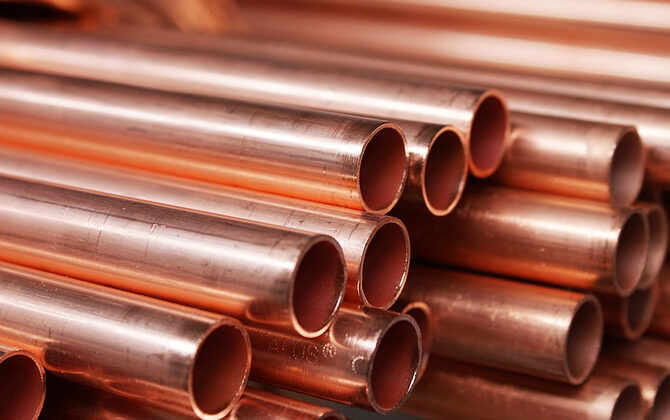
Copper has always been cyclical. Prices rise with growth, fall with recessions, and recover when demand returns. But the next phase of the copper market may not behave like past cycles at all.
The world is pushing toward rapid electrification, grid expansion, and energy transition while copper supply remains slow, constrained, and increasingly fragile. If copper demand continues to rise faster than supply can respond, the market risks hitting a supply wall.
If that happens, copper doesn’t just get more expensive.
It becomes strategic, volatile, and structurally inflationary.
What a Copper “Supply Wall” Really Means
A copper supply wall is reached when new supply cannot grow fast enough to meet incremental demand, regardless of price.
This is not a temporary shortage caused by strikes or weather disruptions. It’s a structural condition driven by:
Declining ore grades across major producing regions
A lack of large, high-quality new discoveries
Long development timelines (often 10–15 years from discovery to production)
Rising environmental, social, and permitting hurdles
Capital discipline from mining companies after decades of boom–bust cycles
Once supply elasticity disappears, price becomes the only remaining balancing mechanism.
The Domino Effect: Consequences of a Copper Crunch
1. Price Spikes and Volatility
History offers clues. During the 2000s commodities boom, copper prices quadrupled. A severe supply constraint could see similar spikes, with prices potentially exceeding previous records. This volatility would ripple through entire supply chains.
2. Inflationary Pressure Across Industries
From construction to consumer electronics, manufacturing costs would rise. A homebuilder would pay more for wiring and plumbing. Electronics manufacturers would face higher component costs. These increases would likely pass to consumers.
3. Green Transition Speed Bumps
Paradoxically, the material essential for decarbonization could become a bottleneck for it. Wind turbine installations might slow. EV production could face constraints. The International Energy Agency estimates copper demand from clean energy technologies will double by 2030 where will it all come from?
4. Substitution and Innovation (The Silver Lining)
Shortage drives innovation. We might see:
More aluminum substitution in electrical applications (though less efficient)
Advanced recycling techniques to recover copper from electronic waste
Thinner, more efficient copper coatings and alloys
Redesigns using less copper without sacrificing performance
5. Geopolitical Tensions Intensify
Countries with copper reserves would gain strategic leverage. Chile, Peru, and the Democratic Republic of Congo would become even more critical players. This could reshape trade alliances and create new dependencies.
6. Mining’s Environmental Dilemma Deepens
Pressure to increase supply could lead to shortcuts in environmental standards. Conversely, it might accelerate investment in cleaner extraction technologies and circular economy solutions.
What Happens to Prices When Supply Hits a Wall
When supply becomes inelastic, price behavior changes.
Instead of:
Gradual rallies
Predictable cycles
Clean mean reversion
You get:
Sharp upward price spikes
Shallow corrections
Prolonged periods of elevated prices
In this environment, copper prices stop responding neatly to short-term economic slowdowns. Scarcity overwhelms cyclical demand signals.
The Inflationary Consequences
Copper is embedded in nearly every physical investment the modern economy depends on:
Construction
Power generation
Manufacturing
Infrastructure
Defense and transportation
If copper prices remain structurally high:
Infrastructure projects become more expensive
Capital expenditure budgets stretch or break
Inflation becomes harder to suppress, even during slower growth periods
Governments Get Involved
When a material becomes scarce and essential, governments stop treating it as just another traded commodity.
If copper supply tightens materially, expect:
Strategic stockpiling
Resource nationalism
Export controls
Political pressure on mining jurisdictions
Accelerated permitting for domestic projects
Ironically, these actions often tighten supply further in the short term, increasing volatility and uncertainty.
Why Substitution Won’t Solve the Problem
One of the most common counterarguments to high copper prices is substitution—mainly with aluminum. But substitution has limits.
Aluminum wiring requires thicker cables
It increases space requirements and energy losses
Many high-performance and safety-critical applications cannot substitute without efficiency trade-offs
In electrification, reliability matters more than cost minimization.
In practical terms, copper isn’t optional.
Investment Implications
If copper hits a supply wall, traditional forecasting models become less useful. The focus shifts from timing cycles to positioning for regime change.
Key implications:
Volatility increases, but trends persist
Miners can outperform the underlying metal once price expectations reset
Long-dated projects gain option value
Structural exposure matters more than short-term trades
This is not a tactical trade it’s a strategic allocation question.
The Bottom Line: Awareness and Adaptation
Copper’s supply challenge represents a classic resources puzzle: how to fuel future growth with finite materials. Unlike fossil fuels, copper doesn’t get consumed it gets used and potentially reused. The ultimate solution likely combines increased recycling efficiency, technological innovation, and careful demand management.
For businesses and consumers, the message is clear: the era of taking copper for granted is ending. Its future and by extension, the future of our electrified world will depend on how wisely we manage this humble yet extraordinary metal today.
The copper crunch isn’t just a mining story; it’s a story about civilization’s material foundations. How we respond will test our capacity for innovation, cooperation, and long-term thinking. The red metal’ red light might just force us to build a better road forward.
TRADING
Expertise in commodities trading, advisory, and procurement management services.
CONTACT
Churchill Executive Towers, Office 900 Business Bay, Dubai, UAE
801 Brickell Ave Ste 811 Miami, FL 33131
Dubai - 971 55 117 7276
Miami - 305 461 0016 info@stonekingdomcap.com